
WONDERS OF TÜRKİYE: GÖBEKLİTEPE
Göbeklitepe is one of the most remarkable archaeological sites in the world. It has changed how we understand early human history. For many years, scholars believed that organized religion and monumental building came after farming and settled life. Göbeklitepe shows a different story. It suggests that people were building large, symbolic structures even before agriculture began. It is also physical evidence that religious thought goes back much further than previously imagined.
Its Discovery
The first signs of Göbeklitepe were noticed in 1963 during a joint surface survey conducted by Istanbul University and the University of Chicago. However, the importance of the site was not understood at that time, and no detailed excavation was carried out.
The real discovery of Göbeklitepe began in 1986, when a local farmer was ploughing his field and found carved stone pieces. He brought these objects to the Şanlıurfa Museum. For a while, these findings did not attract much attention.
Everything changed when the German archaeologist Klaus Schmidt, who was working on the nearby Nevali Çori site, examined the stones in the museum. He recognized that they belonged to the Neolithic period. After visiting the area, he realized that the site was not ordinary, but a large and important monumental center.
In 1995, new surveys were carried out under the direction of the Şanlıurfa Museum, with the support of the German Archaeological Institute. Excavations officially began in 1996. These works continued until 2006 under the leadership of the Şanlıurfa Museum, with Klaus Schmidt as the scientific advisor.
Şanlıurfa
Göbeklitepe is located near the city of Şanlıurfa in southeastern Türkiye, a region known for its deep historical roots and cultural richness. Şanlıurfa is often called the “City of Prophets” because of its strong place in religious traditions. According to local belief, it is associated with the life of the Prophet Abraham, and this connection has made the city an important spiritual center for centuries.
The city has a long and continuous history that reaches back to ancient times. It has been home to many different civilizations, including the Sumerians, Akkadians, Babylonians, Romans, and Ottomans. Each of these cultures left traces that can still be seen today in the city’s architecture, traditions, and daily life.
The area around Şanlıurfa is especially important for understanding early human history. It lies within the Fertile Crescent, a region where some of the first human communities began to settle and experiment with agriculture. Göbeklitepe, located just a short distance from the city, is part of this wider historical landscape.
The Date
The structures at Göbeklitepe date back to around 9600 BCE, which makes the site more than 11,000 years old. This places it in the Pre-Pottery Neolithic period, a time when human societies had not yet developed pottery, metal tools, or fully settled village life. People were still mostly hunter-gatherers, moving across the landscape in search of food.
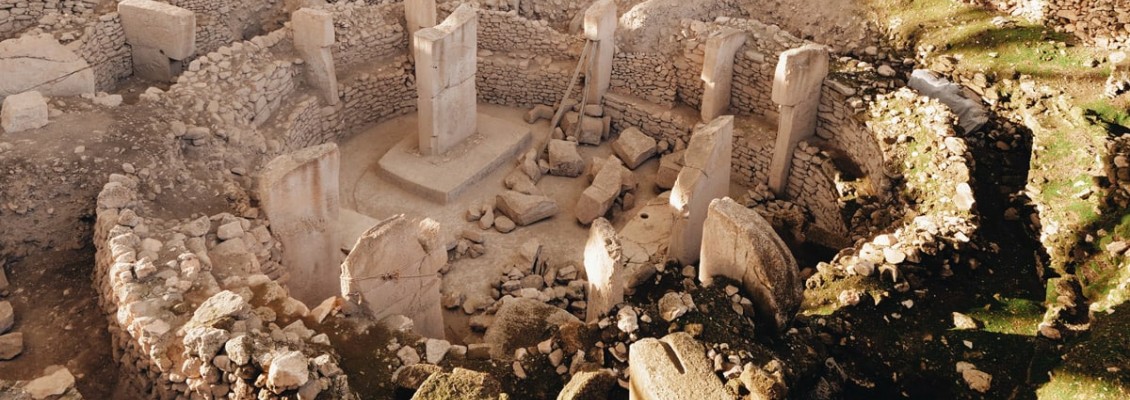
What makes Göbeklitepe especially important is that such large and complex structures were built at a time when we would not expect this level of organization. The site includes massive T-shaped stone pillars, some weighing several tons. These stones were carefully carved, transported, and arranged in circular enclosures. This suggests that early communities were capable of planning, cooperation, and skilled craftsmanship on a large scale.
The construction of Göbeklitepe challenges the older idea that monumental architecture only appeared after the development of agriculture and permanent settlements. Instead, it shows that symbolic or ritual needs may have played a key role in bringing people together. Some researchers believe that gatherings at places like Göbeklitepe may have even encouraged the later development of farming, as larger groups needed more stable food sources.
Remnants
One of the most striking features of Göbeklitepe is its large, T-shaped stone pillars. These pillars stand at the center of circular enclosures and can reach up to 5–6 meters in height. Each enclosure usually has two taller central pillars, surrounded by smaller ones placed along the walls. The stones were cut and shaped with great care, showing a high level of skill for such an early period.
Many of these pillars are decorated with detailed carvings. Animals appear frequently, including snakes, foxes, wild boars, lions, scorpions, and birds. These figures are not random. They are often shown in dynamic poses, as if they are moving. Some animals, such as predators, may have symbolized danger or power, while others may have had protective or spiritual meanings.
One well-known example is the so-called “Vulture Stone,” which shows a large bird along with other symbols. Some researchers believe this scene may be connected to early beliefs about death or the afterlife. Another example is the repeated image of foxes carved along certain pillars, which may have had a special symbolic role for the people who built the site.
In addition to animals, some pillars show human-like features. On a few of them, arms and hands are carved along the sides, and a belt or loincloth is visible. These details suggest that the pillars may represent stylized human figures rather than simple architectural elements.
There are also abstract symbols, such as H-shaped signs and other geometric forms. Their meanings are still not fully understood, but they may have been part of an early symbolic language.
These carvings and remnants give important clues about the beliefs and worldview of the people who built Göbeklitepe. Although no written records exist, the images suggest that the site was more than just a physical structure. It was likely a place filled with meaning, where early communities expressed their ideas about life, nature, and the unseen world.
Its Community and Function
Unlike later ancient sites, Göbeklitepe does not show clear evidence of permanent settlement. Archaeologists have not found remains of houses, kitchens, or everyday domestic spaces. There are no clear traces of long-term living, such as ovens, storage areas, or large amounts of household waste. This absence is important, because it suggests that the site was not a village or a city.
Instead, many researchers believe that Göbeklitepe functioned as a special gathering place. Groups of people may have travelled from different areas to come together here at certain times of the year. These gatherings may have included rituals, ceremonies, or communal activities that held social or spiritual meaning. The effort required to build and maintain such large structures also suggests cooperation between different groups.
Some scholars think that feasting took place at the site, based on animal bones found during excavations. These remains show that large numbers of wild animals were hunted and consumed, possibly during special events. Such gatherings could have played an important role in bringing communities together and creating shared traditions.
Another interesting feature is that many of the enclosures were intentionally buried after a period of use. This was not a natural process but a deliberate act. The reasons are still unclear, but it may have been part of a ritual cycle, where old structures were covered and new ones were built nearby.
Its Importance
Today, Göbeklitepe is recognized as a UNESCO World Heritage Site and is protected as one of the most important archaeological discoveries of modern times. A large protecting structure has been built over the site to protect the pillars from weather damage, while still allowing visitors to walk around and observe the remains.
Göbeklitepe holds a special place in reflecting ideas that resonate with Islamic thought. The site shows that humans have long sought to connect with the divine and the unseen world. The monumental pillars, carvings of animals, and circular enclosures suggest that early humans were deeply engaged in symbolic and spiritual practices. In Islam, humanity is seen as entrusted with the responsibility to understand, reflect upon, and respect creation. Göbeklitepe can be seen as an early expression of this human desire to find meaning beyond everyday life.
Göbeklitepe continues to attract visitors, researchers, and historians from around the world. It stands as a powerful reminder of early human creativity, organization, and belief. At the same time, many questions remain unanswered. The exact purpose of the site, the meaning of its symbols, and the lives of the people who built it are still being studied. This sense of mystery is part of what makes Göbeklitepe so fascinating today.
Leave a Comment